Strings
Setar
Summary
The Setar is one of the most delicate and expressive instruments of Persian music. With its four strings and unique playing technique using the fingernail of the right index finger, it produces a gentle, intimate, and reflective sound. It is a central instrument of Persian classical music and a symbol of Persian poetry, spirituality, and musical elegance.
Description
Setar – The Voice of Reflection and Intimacy
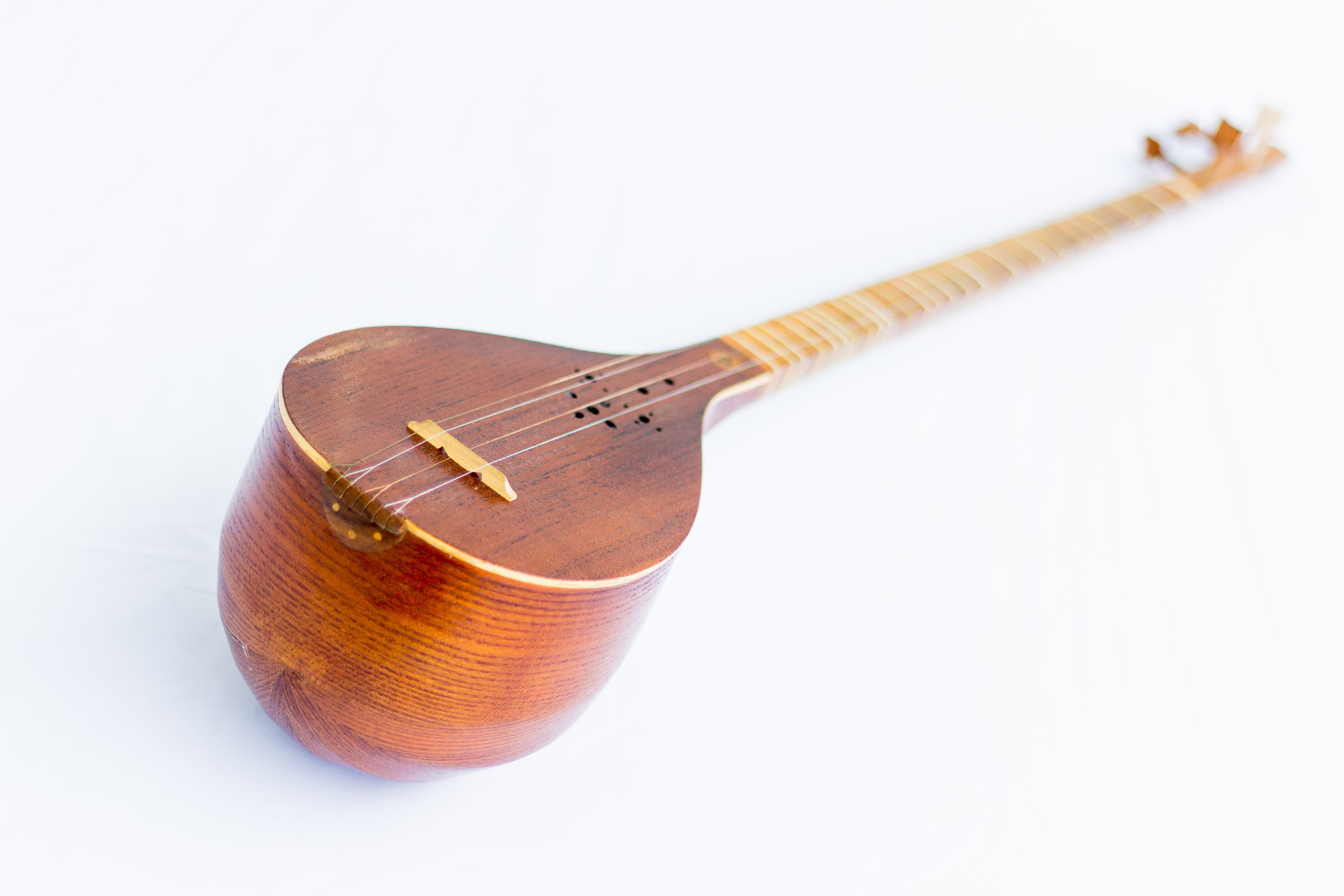
The Setar is one of the most authentic and beloved instruments of Persian music. Known for its delicate, intimate, and expressive sound, it has been closely associated with Persian culture, poetry, and mysticism for centuries. Although it belongs to the family of long-necked lutes and is related to the Tar, the Setar possesses a unique musical identity that sets it apart as one of the most expressive instruments in Persian classical music.
The instrument features a small wooden body, a long neck, and four strings. It is played with the fingernail of the right index finger, producing a subtle and highly nuanced tone. Historically, the Setar had only three strings, from which its name originates. A fourth string was added later, expanding its tonal possibilities while preserving its traditional name.
The roots of the Setar extend back several centuries and can be traced to ancient lute traditions of the Iranian cultural sphere. Throughout history, it became a favored instrument among musicians, poets, and mystics, admired for its ability to convey profound emotions and spiritual depth. Its gentle sound makes it particularly suitable for improvisation, contemplation, and personal musical expression.
Within Persian classical music, the Setar plays a central role in the performance of the Radif, the traditional repertoire of Persian art music. Its flexibility allows musicians to express the subtle intervals, ornaments, and melodic nuances that characterize the Persian musical system. Generations of master musicians have enriched its repertoire and refined its performance techniques.
Today, the Setar is not only an important instrument in traditional Persian music but also a valued voice in contemporary and intercultural musical projects. Its intimate and thoughtful sound blends naturally with instruments from diverse traditions, creating new artistic possibilities. As a result, the Setar continues to symbolize the elegance, depth, and spiritual richness of Persian musical heritage.
Ensemble members
Ensemble members
Musicians in the ensemble who play this instrument.