Other
Qanun
Summary
The Qanun is one of the oldest string instruments of the Middle East. Renowned for its bright, clear sound and wide tonal range, it plays an important role in Persian, Arab, and Turkish musical traditions. The Kanun is a symbol of elegance, virtuosity, and musical richness.
Description
The Qanun is one of the oldest and most distinguished string instruments of the Middle East. Known for its bright, clear, and expressive sound, it holds an important place in the musical traditions of Persia, the Arab world, Anatolia, and the Caucasus. Its remarkable versatility and refined tonal character have made it a central instrument in the classical music of the region.
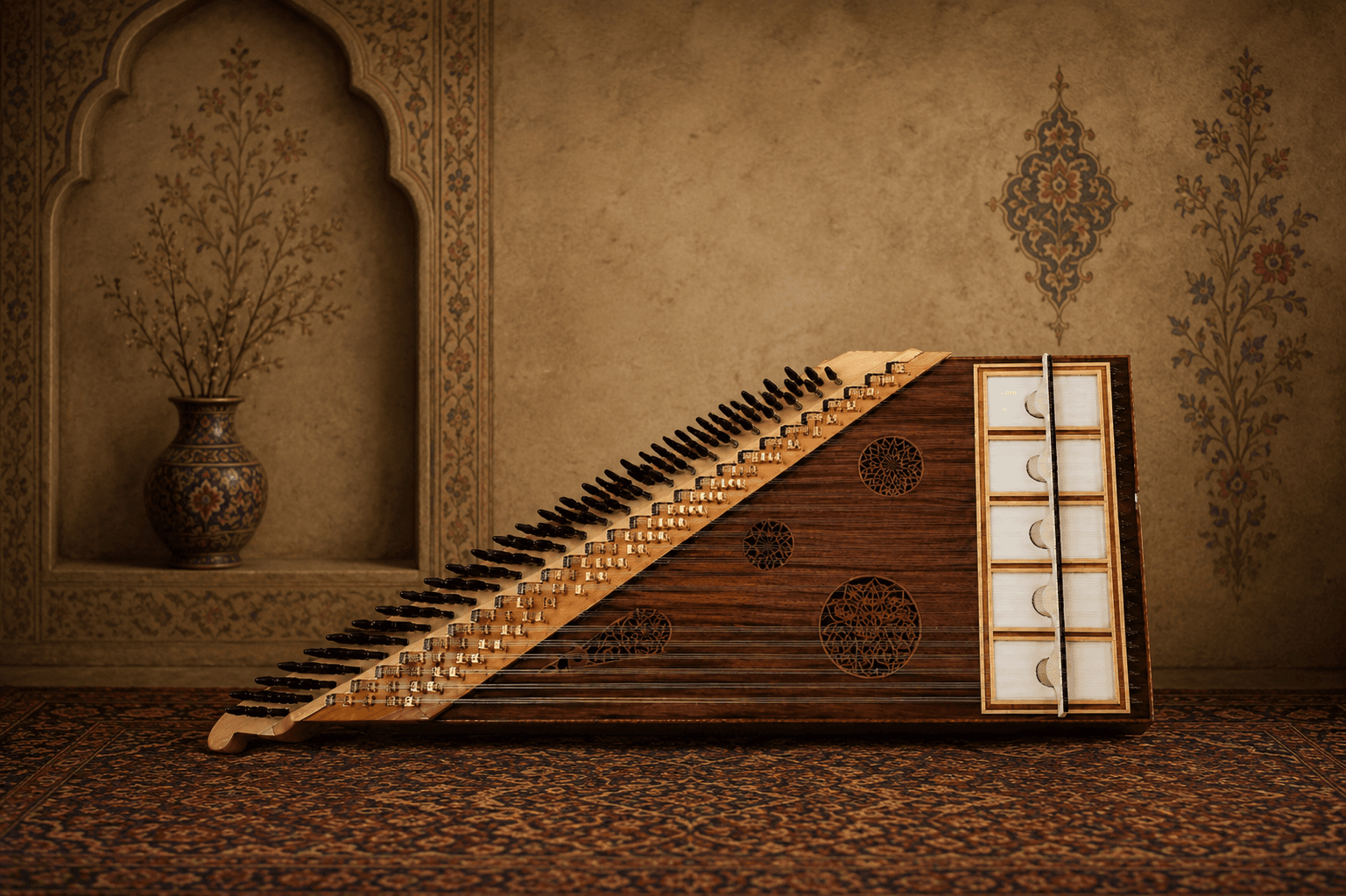
The instrument features a trapezoidal wooden body with numerous strings stretched across its surface. It is played using small plectra attached to the index fingers. One of the Kanun’s most distinctive features is its system of small levers, which allows performers to alter the tuning of individual strings while playing. This enables the precise performance of the scales, modes, and microtonal intervals characteristic of Middle Eastern music.
The origins of the Kanun can be traced back many centuries, with roots believed to lie in the ancient cultures of Mesopotamia and the Iranian cultural sphere. Over time, it became a prestigious instrument in royal courts, cultural centers, and musical academies throughout the region. Its wide range and expressive capabilities made it an essential part of many traditional ensembles.
The Qanun has also played an important role in Iranian music. Although its popularity fluctuated during different historical periods, it experienced a revival during the twentieth century and once again became an integral part of both classical and contemporary Iranian music. Today, it is appreciated as both a solo and ensemble instrument.
Beyond traditional music, the Qanun is increasingly featured in contemporary and intercultural projects. Its transparent and elegant sound blends naturally with instruments from many musical traditions, creating new artistic possibilities and fostering cultural exchange.
With its shimmering tone and rich heritage, the Qanun embodies the beauty, sophistication, and diversity of Middle Eastern music. It continues to captivate audiences around the world and remains one of the region’s most remarkable musical instruments.