Other
Ney
Summary
The Ney is a traditional Persian reed flute known for its warm, expressive, and emotional sound. It plays a central role in Persian classical music and is widely regarded as a symbol of poetry, mysticism, and the human soul.
Description
Ney – The Voice of the Soul in Persian Music
The Ney is one of the oldest and most significant instruments of Persian music. Made from natural reed, this end-blown flute is renowned for its warm, expressive, and deeply emotional sound. For centuries, it has occupied a special place in Persian music, poetry, and mysticism, becoming one of the most symbolic instruments of Iranian culture.
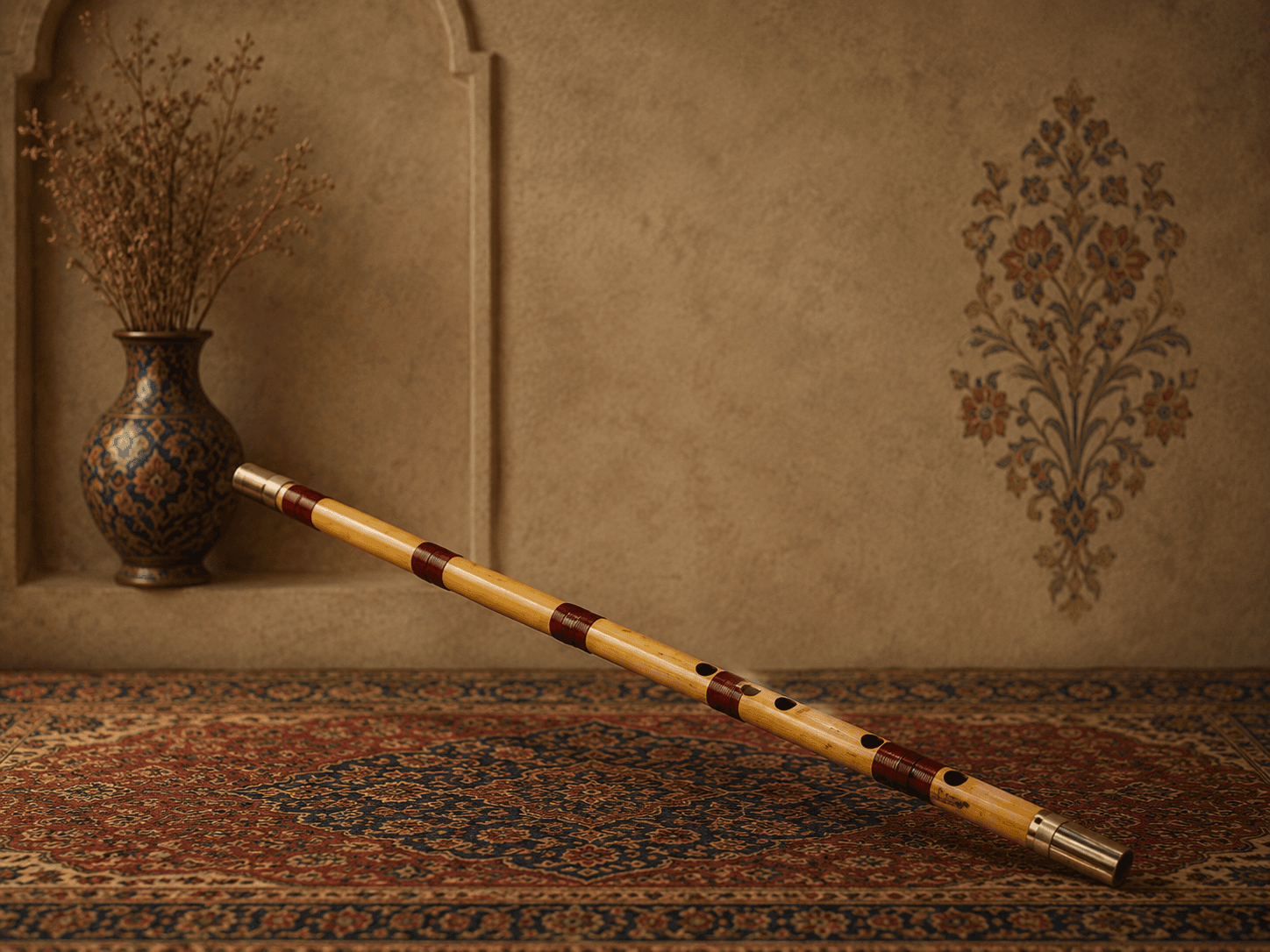
The Persian Ney is crafted from a hollow reed and features finger holes on the front and a thumb hole on the back. Unlike many other flutes, it is played using a unique technique in which the instrument is positioned between the lips and teeth. This method allows for remarkable tonal flexibility and expressive nuance.
The history of the Ney extends back thousands of years. Similar reed flutes were already known in ancient Iranian civilizations. Over time, the Ney became a central instrument of Persian classical music while also maintaining its importance in regional and spiritual traditions.
In Persian classical music, the Ney is especially valued for its ability to perform subtle melodic nuances and improvisations. Its sound is often compared to the human voice because of its emotional depth and expressive qualities.
The Ney also holds a prominent place in Persian mysticism. It is famously featured in the opening lines of Rumi’s Masnavi: “Listen to the reed flute and the tale it tells.” In Sufi thought, the Ney symbolizes longing, separation, and the search for spiritual truth.
More than a musical instrument, the Ney is a symbol of emotion, poetry, and spirituality, and remains one of the most cherished voices of Persian musical culture.