Other
Gheychak
Summary
The Gheychak is a traditional Persian bowed string instrument rooted in the regional musical traditions of Iran. Its warm and expressive sound has made it an important part of Persian ensembles and orchestras. The Gheychak serves as a bridge between ancient traditions and contemporary Persian music.
Description
Gheychak – A Bridge Between Folk Tradition and Persian Art Music
The Gheychak is a traditional Persian bowed string instrument with roots in the regional musical traditions of Iran, particularly in Baluchistan and the southeastern parts of the country. Known for its warm, expressive, and distinctive sound, it occupies a unique place within Iran’s rich musical heritage. Today, the Gheychak is valued both in folk traditions and in Persian classical music.
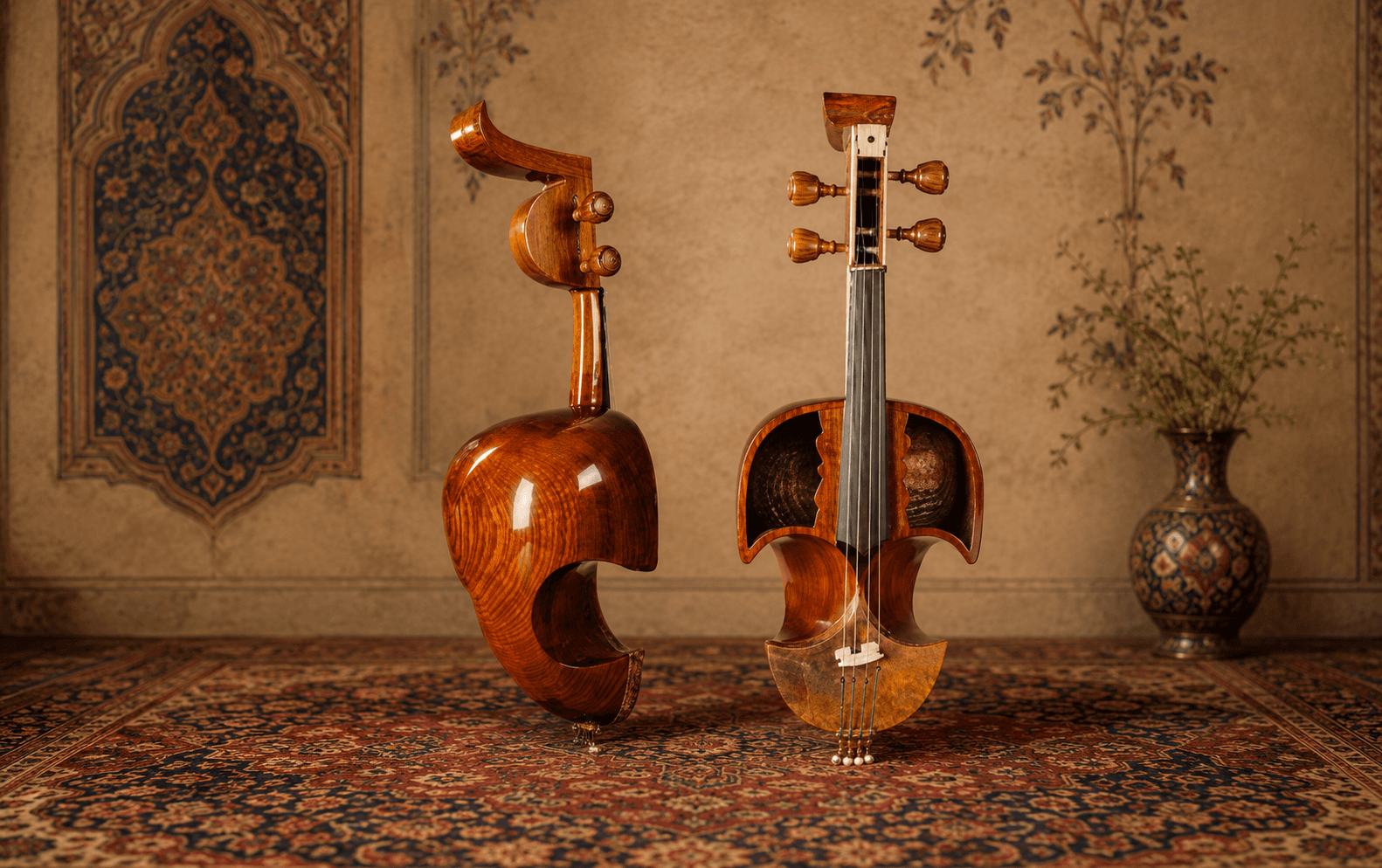
The instrument features a hollow resonating body, a short neck, and several strings played with a bow. Its unique construction produces a characteristic tone that can be gentle and lyrical or powerful and dramatic. This versatility makes the Gheychak especially effective in conveying emotion and melodic expression.
The history of the Gheychak is closely connected to the traditional music of various Iranian communities. Originally used mainly in regional folk music, it underwent significant development during the twentieth century. New orchestral versions—including soprano, alto, and bass Gheychaks—were created, allowing the instrument to become an important part of Persian orchestras and ensembles.
Within Persian classical music, the Gheychak is appreciated for its rich tone and expressive capabilities. It contributes warmth, depth, and color to ensemble performances while highlighting the subtle melodic characteristics of Persian musical traditions.
Today, the Gheychak is increasingly featured in contemporary and intercultural musical projects. Its distinctive voice blends naturally with instruments from a wide range of musical cultures, creating exciting opportunities for artistic collaboration and innovation.
The Gheychak represents a successful meeting point between regional heritage and modern musical development. Deeply rooted in tradition while embracing new possibilities, it continues to play an important role in the evolving landscape of Persian music.